When fully deployed, the balanced scorecard transforms strategic planning from a creative exercise into the interim tool for organizations migrating from purely intermediary metrics to a dashboard of hard metrics like ROI.
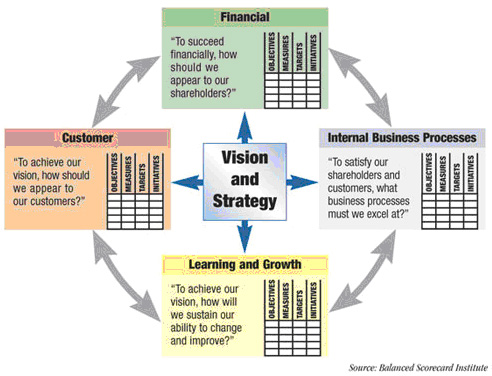
"What gets measured gets done."
It introduces four different perspectives to include on the balanced scorecard: financial, customer, internal business processes, and learning and growth. Whether you subscribe strictly to their outline or adapt it for your own use, the balanced scorecard suggests that you view the organization from different perspectives, developing metrics, setting goals, defining timeframes, and analyzing data relative to each. This mix and match illustrates how individual initiatives and integrated campaigns work toward fulfilling enterprise-wide goals.
| The benefits of Balance Scorecards are: |
 |
Focuses on strategy and long term success (translates strategy into action) |
| |
Manage more resources than just the financial |
| |
Monitor progress for building capabilities and acquiring intangible assets for future growth |
| |
System for communication, information and learning |
| |
Knowledge management (Company’s survival depends on ability to innovate.-knowledge to learn, adjust and make changes) |